4–5 hours on water (7–8 hrs door to door)
6–8 people per raft
Expert — Grade II, III & IV+
Mid-September to end of June
22 rapids
Grade II, III and IV+
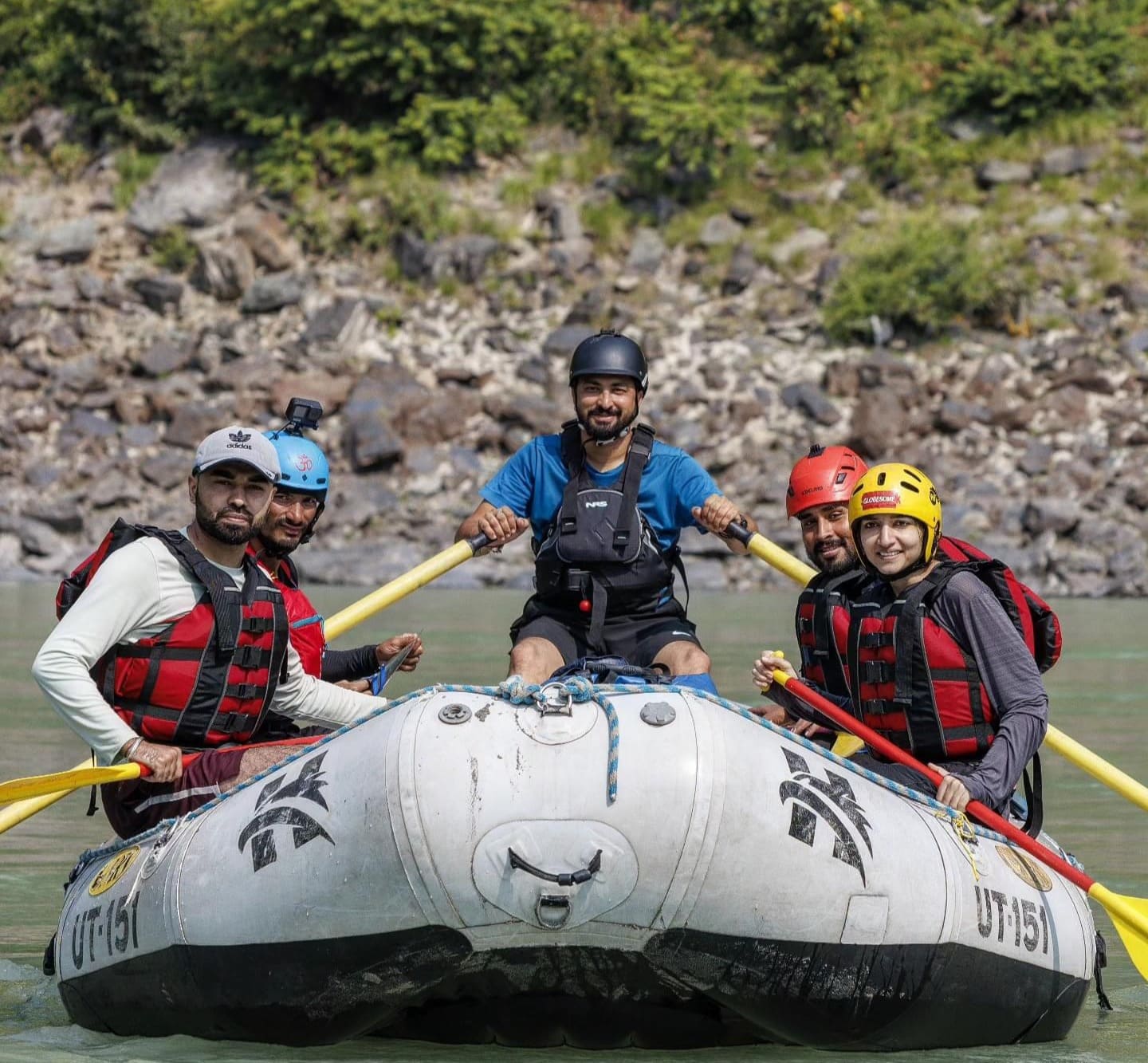
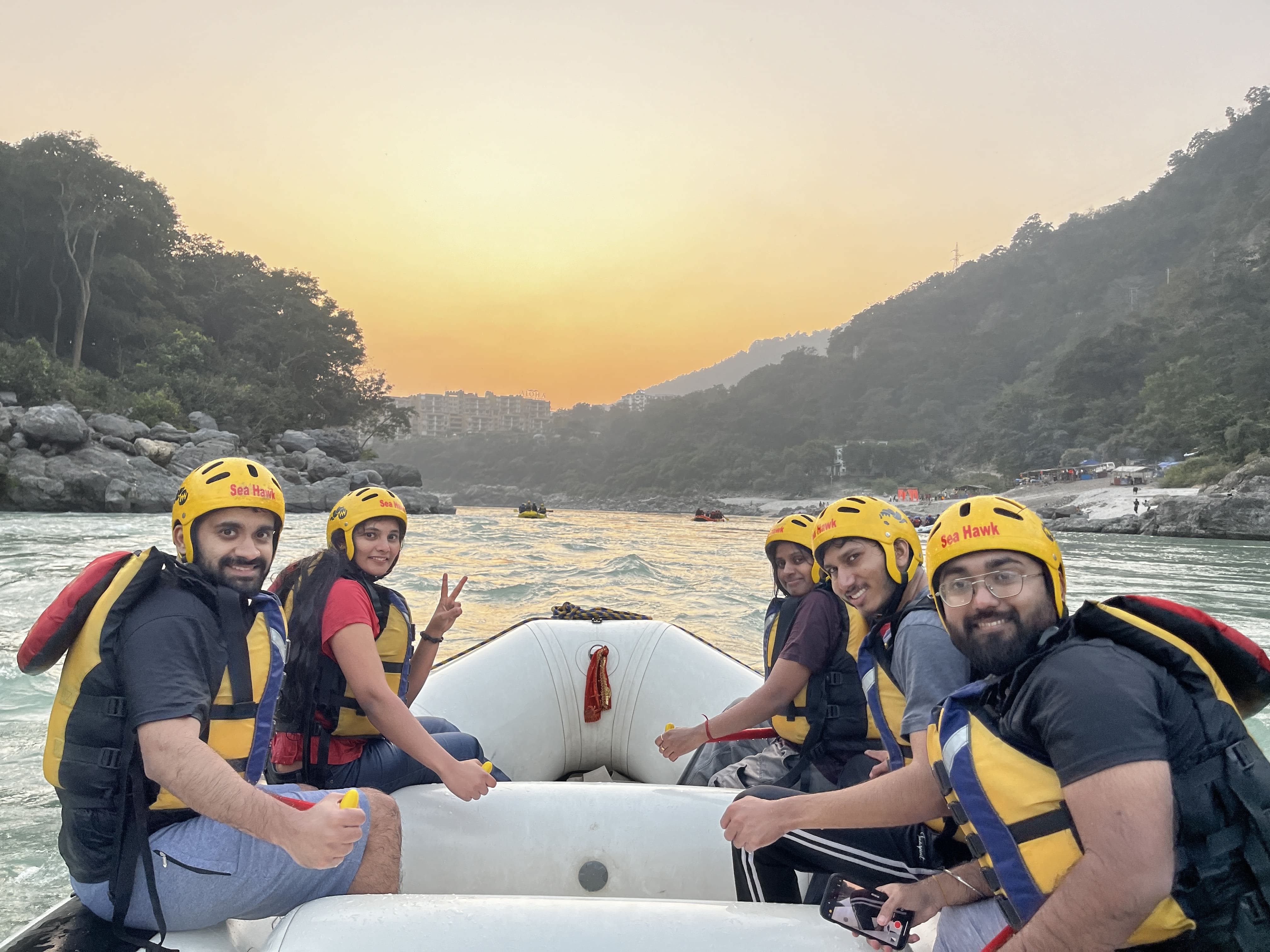
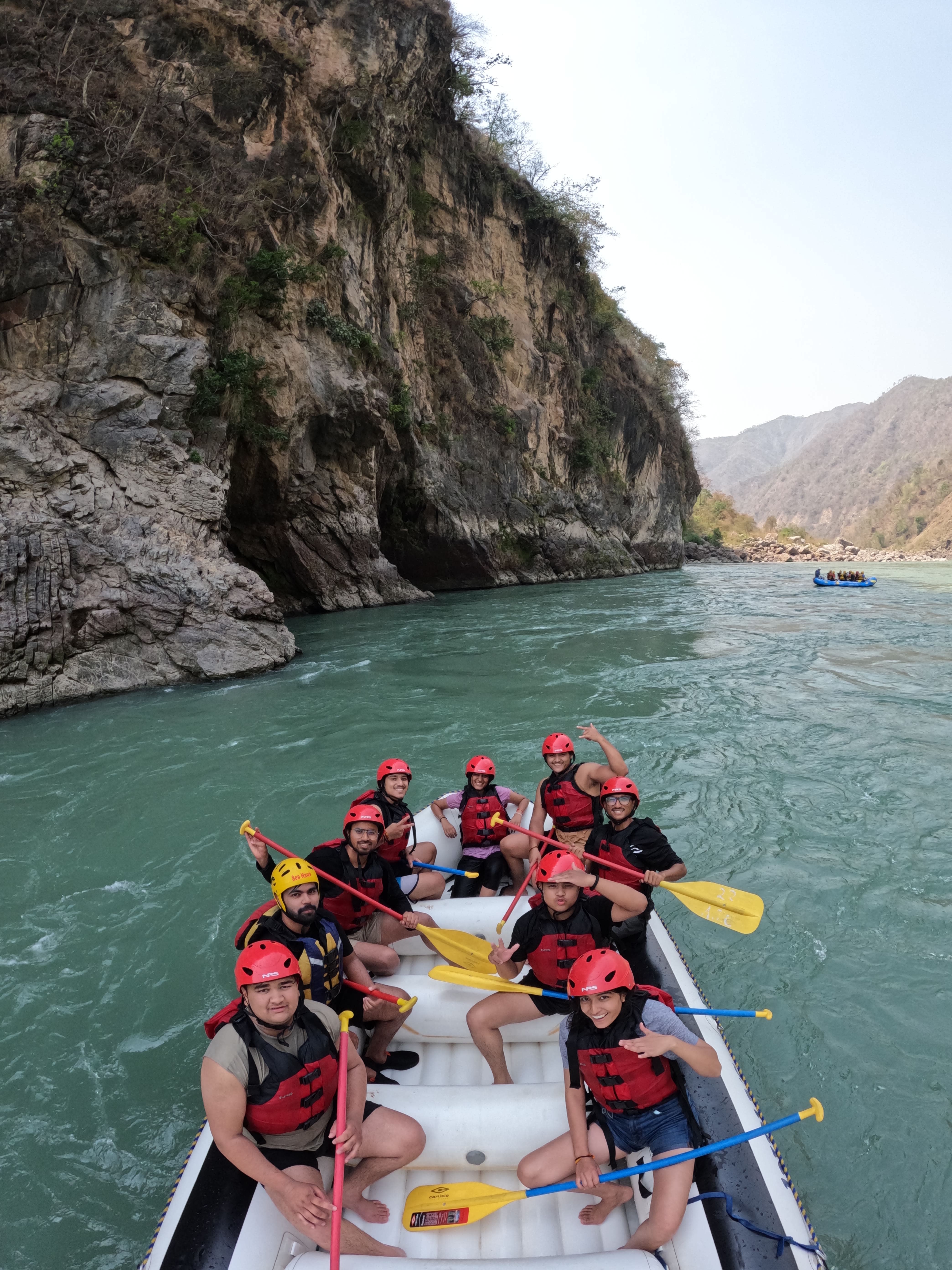
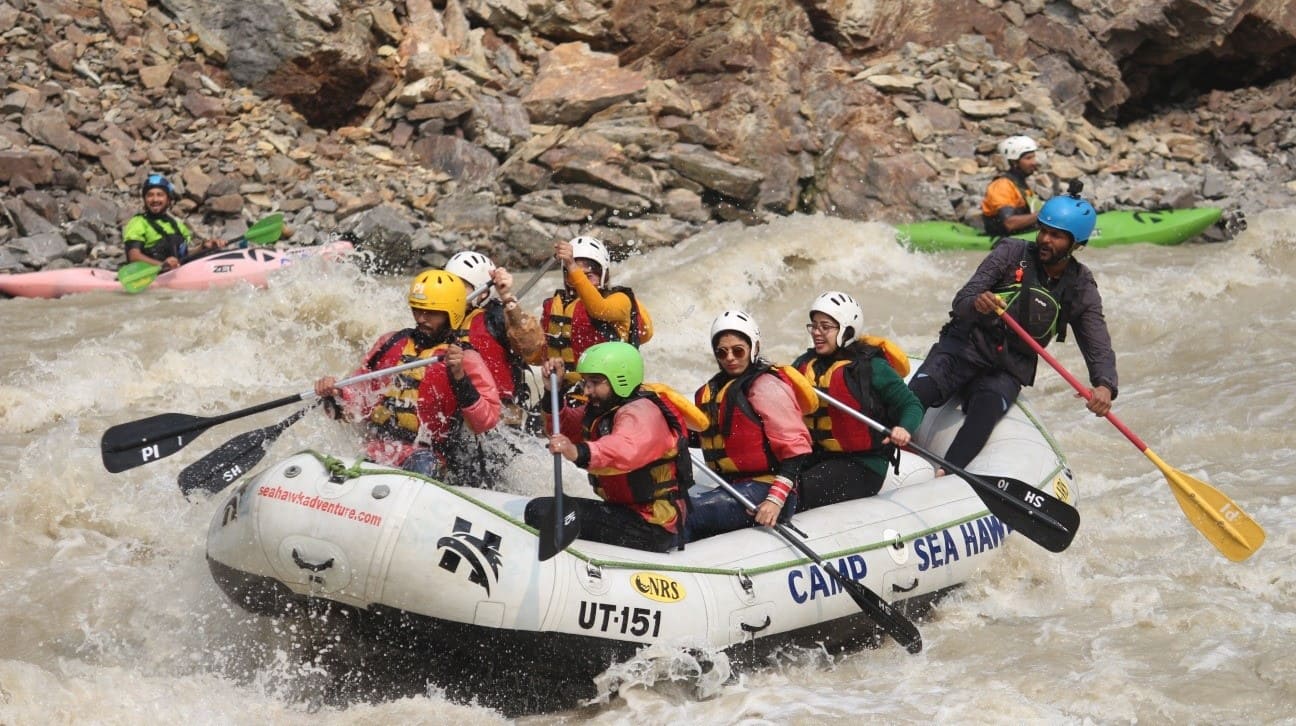
The 36 km stretch from Kaudiyala to NIM Beach is in a category of its own. Twenty-two rapids span the full range from Grade II warm-ups to the Great Wall (Grade IV+) — the most powerful commercially-rafted rapid on the entire Ganga and the reason experienced paddlers travel specifically to Rishikesh. This is a full-day expedition, not an activity: it demands teamwork, physical endurance, and the willingness to commit to some genuinely serious whitewater.
The day starts early, with an 7:00–7:30 AM departure from Tapovan. The 1.5-hour drive to Kaudiyala winds through increasingly dramatic sections of the Ganga valley, giving you a preview of the river's character before you put a paddle in the water. At the put-in, the briefing runs 30–40 minutes and is more detailed than any of the shorter routes — the guide covers Grade IV-specific commands, scouting procedure, and does a visual walk of Great Wall with the whole group so everyone knows exactly what they're paddling into.
The upper 10 km from Kaudiyala to Marine Drive is the warm-up, and it's a demanding one — fast, technical, with Grade II–III rapids arriving in quick succession. By Marine Drive the team is warmed up and fully coordinated. Then, without much warning, the canyon narrows and the roar of Great Wall becomes audible from upstream. The rapid lives up to every description: a massive, thundering hydraulic backed by a standing wave that hits the raft like a physical force. The 10–15 seconds inside it are unlike anything else on any rafting run in India.
After Great Wall there's a mid-run lunch stop on a sand beach — packed lunch, 30–40 minutes of rest, and time to process what just happened before your guide briefs the lower section. The final 16 km contains all the named Rishikesh rapids: Three Blind Mice, Crossfire, Roller Coaster, Golf Course, and Club House. These are Grade III and III+ rapids that would be the highlight of any other trip — on the 36 km run, they're the finale.
Who should book this route: Guests who have prior whitewater experience or have done at least the 16 km run. First-timers in excellent physical condition can book with guide approval — discuss at time of booking. The 36 km requires sustained paddling over 4–5 hours on the water; moderate to good fitness is essential. Minimum recommended age is 16.
Free neoprene wet suits from December to March. Dedicated safety kayaker for the full 36 km. All guides on this route hold advanced certifications for Grade IV whitewater and have a minimum of seven years' guiding experience on Kaudiyala and above. Personal travel insurance is strongly recommended.
Rafts leave Tapovan by 7:00–7:30 AM. The drive to Kaudiyala is approximately 1.5 hours and winds through progressively narrower sections of the Ganga valley. The road itself gives you your first sense of what the river looks like before it opens up into the broader Rishikesh corridor — fast, green, and seriously compelling. Use the drive to eat a light breakfast and hydrate; you'll be on the water for most of the day.
A full 30–40 minute briefing at the put-in. For the 36 km route the briefing is more detailed than shorter runs: your guide covers Grade IV-specific techniques including high-side (the command to throw body weight to prevent a flip), combat rolls for swimmers in powerful hydraulics, rapid-scouting procedure, and the specific character and line for Great Wall. Everyone walks the rapid visually before running it.
The opening 10 km from Kaudiyala introduces a series of Grade II–III rapids in rapid succession. The river here is narrower and faster than the Rishikesh corridor, with less time between rapids and more continuous technical reading required. This section is the warm-up — and it's a demanding one. By the time you reach Marine Drive, every paddler is fully awake and working as a team.
Shortly after Marine Drive comes Great Wall, widely regarded as the most powerful commercially-rafted rapid on the Ganga. A thundering hydraulic backed by a massive standing wave, it hits hard, fast, and without mercy. The name is earned: it feels like running into a wall of water. Your guide chooses the line carefully from the scout point, sets the raft up in the tongue of the current, and the team paddles as hard as possible. The 10–15 seconds inside Great Wall are unlike anything on any other run in Rishikesh — visceral, loud, and completely consuming.
After the Great Wall, the river allows a well-earned break. The crew pulls onto a sand beach for a 30–40 minute packed lunch stop. Eat, rest, warm up in the sun, and let the adrenaline settle. Your guide will brief the group on the lower section that still lies ahead.
The lower 16 km contains the full roster of named Rishikesh rapids: Three Blind Mice (Grade III), Crossfire (Grade III), Roller Coaster (Grade III+), Golf Course (Grade III+), and Club House (Grade III). After the Great Wall these feel different — you've been on the river for hours, your team is in sync, and each rapid is approached with a confidence that only a long day on the water can build.
Pull out at NIM Beach in the late afternoon. Vehicle returns to Tapovan office. Door-to-door, including the drive and the packed lunch stop, the full day runs approximately 7–8 hours. It's a complete river day — exhausting, exhilarating, and difficult to top.
GoPro-filmed highlights including Great Wall. ₹1,500 per raft, shared by all passengers. Book at the office before departure — strongly recommended for this run.
This route is recommended for guests who have completed at least the 16 km run or have prior whitewater experience. First-timers can book with guide approval — discuss at time of booking.
October to November and February to April offer optimal conditions: stable flow, clear water, and comfortable temperatures. Some river levels in May can make Great Wall even more intense — ask at booking.