7 days (3–4 hours of water training per day)
2–5 people
Beginner to Intermediate — progresses to Class III
Mid-September to end of June
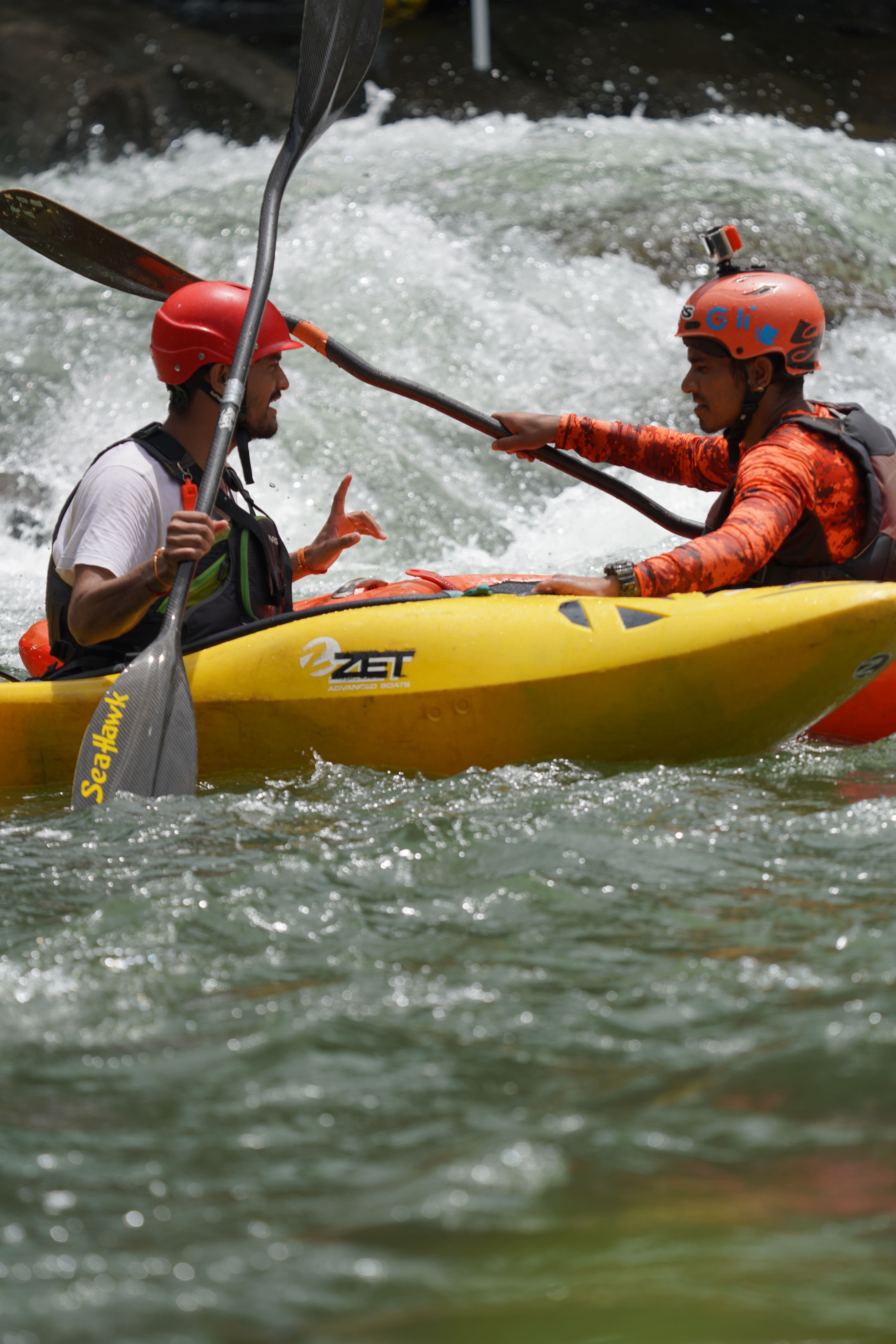
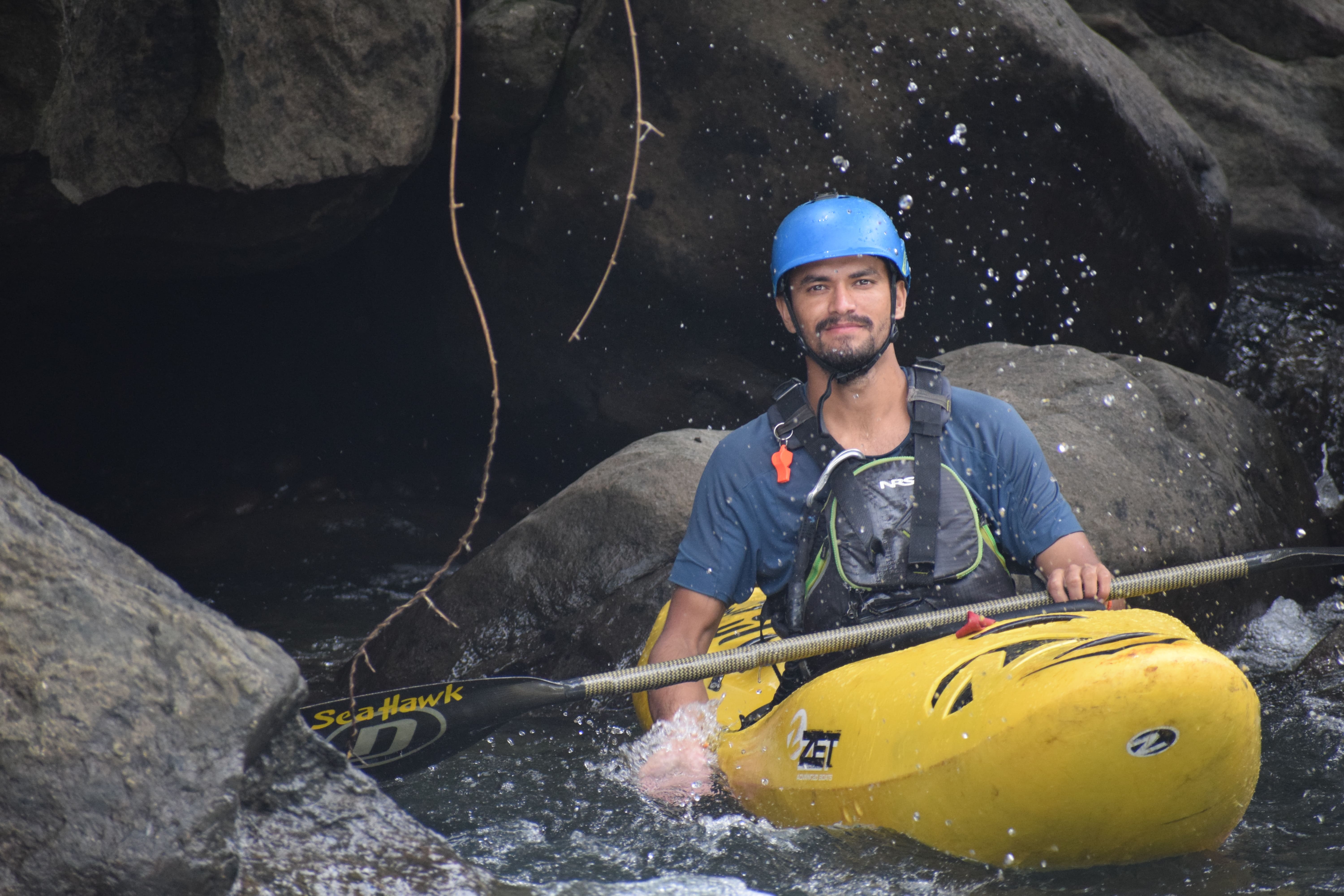
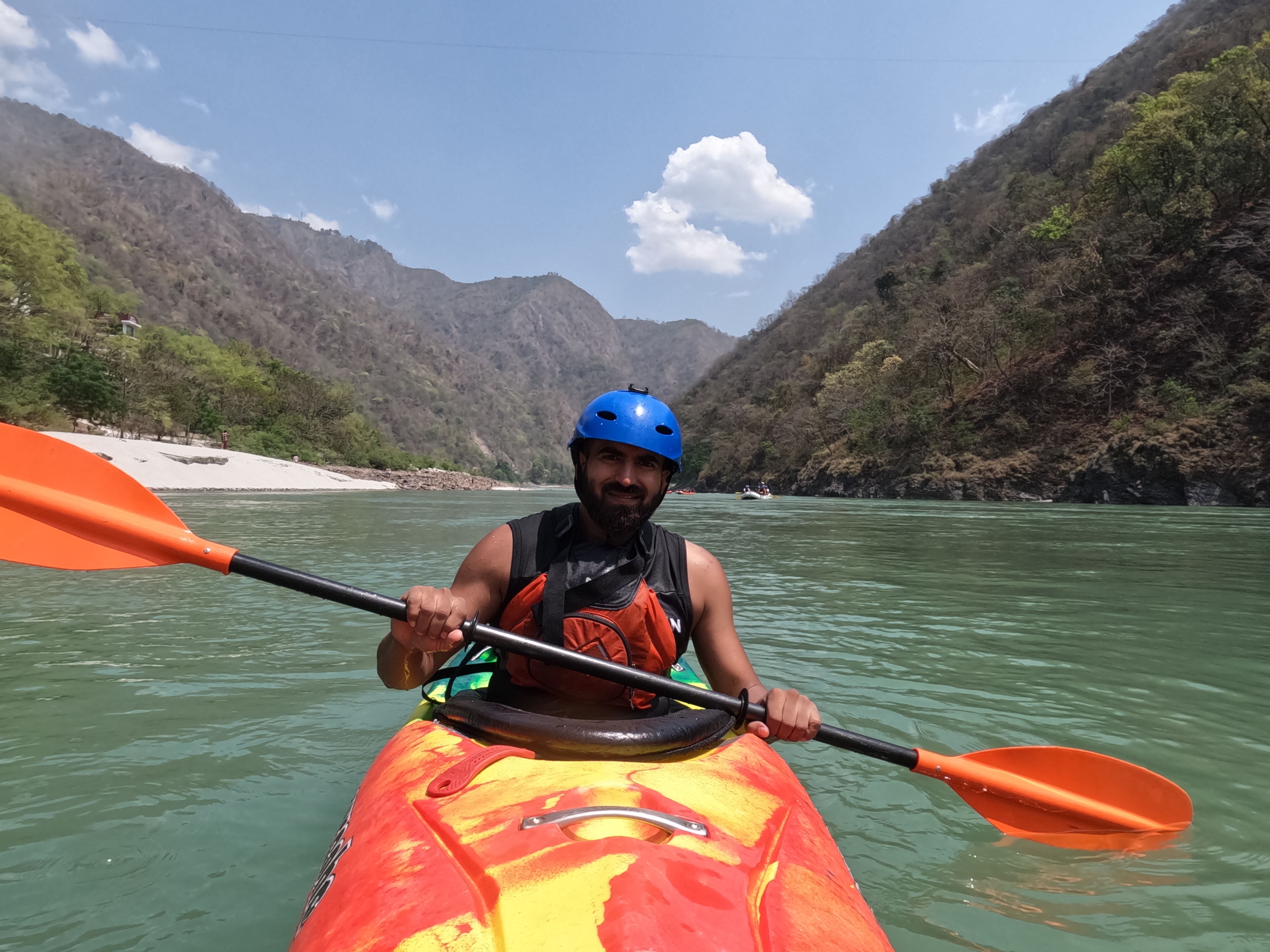
The 7-day Complete Kayak Course is the most thorough introduction to whitewater paddling available in Rishikesh. Over seven mornings on the Ganga, it takes a complete beginner from the very first wet exit to independently navigating Class III rapids — the level at which kayaking starts to feel like a genuine skill rather than an activity. Every session builds on the last, with daily video review and small group sizes (maximum 5 students per instructor) ensuring the kind of individual feedback that accelerates real progress.
The course follows a carefully sequenced progression. Days 1 and 2 cover the non-negotiable foundations: wet exits, correct paddle mechanics, and moving-water awareness. These sessions happen on calm or mild water and are paced to ensure everyone is genuinely comfortable before the course moves forward. Days 3 and 4 introduce the two core river-kayaking skills — eddy turns and ferry glides — on progressively faster water, alongside dedicated Eskimo roll training. The roll is the defining skill of the sport: the ability to right a capsized kayak without swimming. By the end of Day 4 most participants have a reliable calm-water roll.
Day 5 is a technical step change. Class II+ water means tighter eddy structures, faster current, and less margin for technique errors. The focus shifts from "learning the skill" to "applying the skill under pressure" — eddy hopping through a rapid sequence, ferry gliding in stronger current, and reading hydraulics from upstream with enough precision to choose a line before you're committed to it.
Day 6 introduces Class III water and the combat roll — the Eskimo roll performed in moving, aerated whitewater while disoriented. This is substantially harder than the calm-water version and is the skill that separates recreational paddlers from genuine whitewater kayakers. The afternoon guided descent of a Class III rapid is preceded by a full on-foot scout, teaching the decision-making process that experienced paddlers use before running any serious rapid.
Day 7 is the final expedition: a real river run where the instructor follows rather than leads. You navigate, you scout, you choose your lines, and you use your combat roll if needed. This session is designed to prove — to yourself as much as anyone else — that you can handle Class III water independently. A certificate of completion is presented at the finish.
All equipment is included and maintained to international standards. Wet suits and booties are provided free in winter months. The 7-day course is priced lower than the 4-day course because it accommodates a wider range of participants and the longer format allows a slower, more thorough pace — particularly useful for participants who find the roll takes a little longer to land. Graduates of this course regularly return to Rishikesh to kayak independently or continue to our advanced sessions on Class III–IV water.
Comprehensive dry-land session covering kayak anatomy, paddle mechanics, correct posture, forward and sweep strokes, and river hydrology. Flat-water afternoon session focusing on directional control and wet exits. Goal: full wet-exit confidence before Day 2. Video review in the evening.
First sessions on moving water. Introduction to current dynamics, how rocks create eddies, and how to use the flow rather than fight it. Practice wet exits in mild current, moving into initial Eskimo roll attempts in the calm section. Debrief covers any stroke faults identified on video.
Core river-skills session: eddy turns (entering and exiting eddies from the main current) and ferry glides (crossing the river at angle without losing downstream ground). Afternoon brings your first Class II rapid entry — instructor-led, with the safety kayaker in position. End-of-day video debrief focuses on paddle angle and boat lean during eddy turns.
Full morning session dedicated to Eskimo roll — first in calm water, then in mild current. Most participants land a reliable calm-water roll by end of this session. Afternoon is an extended Class II rapid run emphasising independent line choice and eddy-to-eddy navigation. Instructor feedback focuses on anticipation rather than reaction.
Step up to Class II+ water: faster current, more complex eddy structures, closer boulder spacing. Technical focus on eddy hopping (navigating from eddy to eddy down a rapid), ferry gliding in stronger current, and reading hydraulics from upstream. Scenario-based training: instructor sets a specific route through the rapid and you execute it without coaching mid-rapid.
The most demanding training day. Introduction to Class III rapids: more powerful hydraulics, greater consequences for bad lines, and the genuine need for a reliable combat roll (Eskimo roll performed in moving, aerated water while disoriented). Morning session on combat roll training in Class II+ water. Afternoon guided descent of a Class III rapid, scouted on foot before running. Debrief includes discussion of scouting criteria and decision-making frameworks.
The culmination of seven days of training: a final expedition run combining Class II and Class III water from Marine Drive toward Shivpuri. Instructor follows rather than leads — you navigate, you scout, you choose lines, you use combat rolls if needed. The session is assessed but not graded; the aim is demonstration of genuine independence on whitewater. Certificate of completion presented at the finish. Group celebration dinner optional.
Sessions run 9:00 AM–12:00 PM (winter) and 8:00 AM–11:00 AM (summer). Evening video review sessions are included in the programme.
Quick-dry shorts or leggings and a rash guard or T-shirt. Flip-flops or water shoes. Wet suit is provided by the school in winter months.
Water bottle and snack. Sunscreen (water-resistant). Cash for tea and snacks at the training site. Phone stored in instructor dry bag during sessions.
Basic swimming ability required. Moderate fitness recommended — by Day 6 the sessions are physically demanding. No prior kayaking experience necessary.
Graduates of the 7-day course can join our supervised river days on Class III water, or continue to the advanced course (enquire at the school). Many graduates return each season to paddle with us independently.